
Women produce much of the world’s food, yet own less than 20% of land globally. Without rights, they face barriers to inheritance, financial security, and decision-making power.
In Africa, up to 90% of rural land remains undocumented. Across the developing world, nearly 70% of land is unregistered—leaving millions vulnerable to eviction, conflict, and exclusion from development benefits.
In emerging economies, more than 90% of government concessions go to extractive industries on land already occupied by communities. Without legal recognition, families are forced out, ecosystems degraded, and traditional livelihoods lost.
Tenure security unlocks investment, access to credit, and intergenerational wealth.
Secure tenure encourages sustainable land use, conservation, and resilience to climate change.
Clear ownership reduces disputes and strengthens local governance systems.
Recognized land rights reduce inequality and protect communities from exploitation and displacement.
Farmers with secure land rights invest in sustainable practices, boosting yields and reducing hunger.

At Cadasta, we focus on Systems Change, which means tackling the underlying barriers that prevent people from securing their land and resource rights. Our work is centered on shifting some of the conditions and root causes that prevent people and communities from benefiting from economic development and safeguarding natural resources.
By breaking down these structural barriers—lack of data, lack of visibility, and lack of participation—we create the enabling conditions for lasting change. This is how Cadasta contributes to building a world where everyone enjoys secure land and resource rights that unlock opportunities for current and future generations.
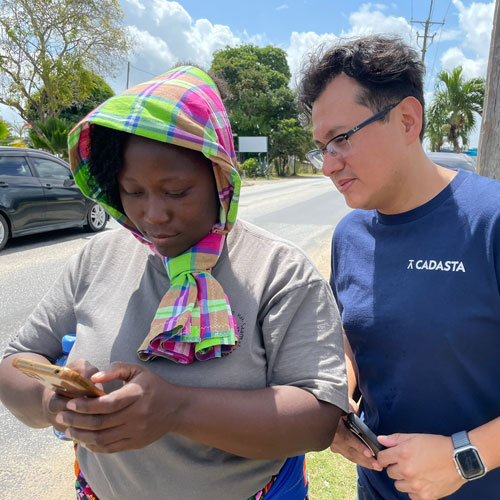
Secure land rights are only possible through strong partnerships. Cadasta equips people to map and secure land rights by providing:
Together with local leaders, Indigenous organizations, governments, and civil society, we are building land systems that reflect the rights of the people who depend on them—and creating a more just, resilient, and sustainable future.
Simple, offline-ready GIS tools that communities can use anywhere.
Hands-on, partner-led training with a focus on women, youth, and Indigenous groups.
Integrating community-sourced data into official systems and supporting reforms.
With your support, communities can claim their land, protect forests, and shape resilient futures. Be part of the movement for justice and climate action.


