




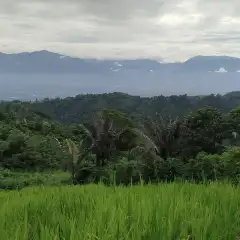

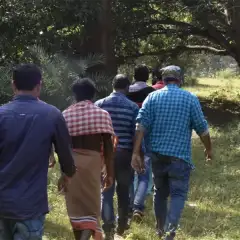
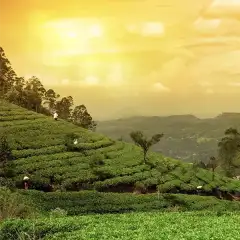
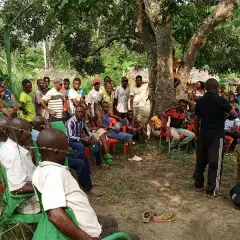
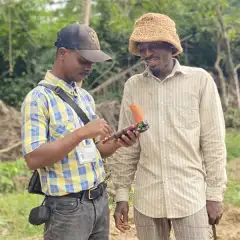
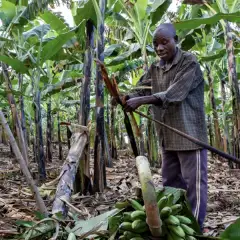
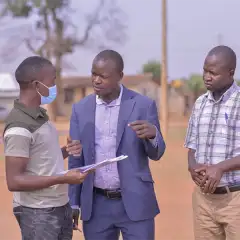
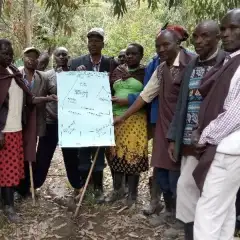
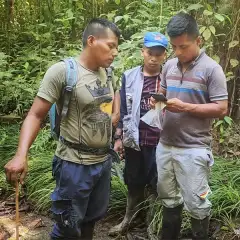
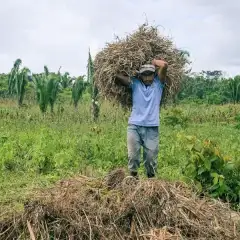
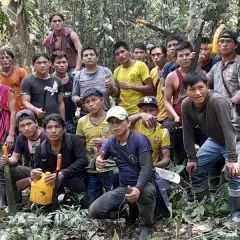
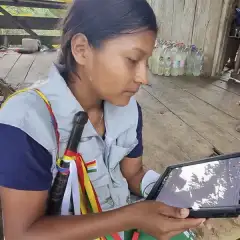
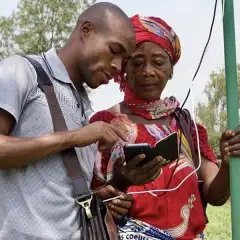
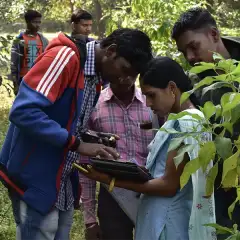
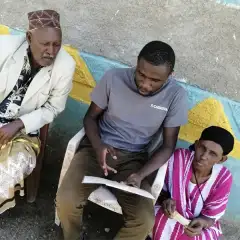


This StoryMap showcases Cadasta and JKPP’s work with Indigenous youth in Indonesia to map ancestral territories, preserve traditional knowledge, and strengthen land rights. Through participatory mapping, digital tools, and peer-to-peer learning, young leaders are documenting forests, shaping land-use plans, and driving long-term advocacy for recognition and sustainable community stewardship.
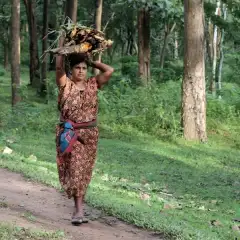
This StoryMap highlights how Cadasta and ARCH-Vahini are helping forest-dwelling families across Gujarat secure land rights under India’s Forest Rights Act. Through GIS mapping, community mobilization, and legal recognition, families are improving their livelihoods, restoring forests, and transforming once-uncertain land into a foundation for economic stability and climate resilience.
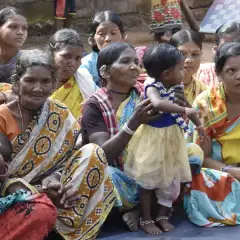
This StoryMap highlights Cadasta and PRADAN’s work in Odisha and Jharkhand to help forest-dwelling communities secure land and resource rights under India’s Forest Rights Act. Through participatory mapping, digital tools, and large-scale training, communities are clarifying boundaries, strengthening tenure security, and improving livelihoods for thousands of households across India’s forest regions.
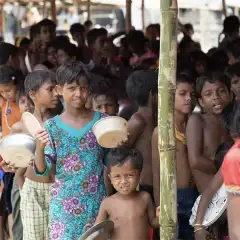
This StoryMap shares how Cadasta and the Council of Minorities supported residents of Dhaka’s Geneva Refugee Camp in documenting housing conditions, mapping infrastructure, and building the first demographic profile of the community. With accurate data, camp leaders can advocate for rehabilitation, improved services, and protection from eviction for thousands of Bihari families.
This StoryMap spotlights the Adivasis for Forests initiative in Maharashtra, where tribal leaders, youth, and women use Forest Rights Act training and GIS mapping to secure ancestral land and community forest rights. Through powerful stories, it shows how legal awareness, organizing, and restoration are transforming livelihoods, governance, and forest conservation.
This StoryMap follows forest-dwelling families in Maharashtra whose livelihoods depend on the land they’ve cultivated for generations. Through Cadasta and Waatavaran’s training and GIS mapping, communities are documenting their forest claims under India’s Forest Rights Act—reducing fear of eviction and strengthening legal protection, security, and hope for future generations.
This StoryMap highlights how Odisha’s Jaga Mission—powered by Cadasta’s mapping tools and 700 trained community data collectors—became the world’s largest slum titling initiative. By documenting 1,725 settlements and issuing over 160,000 land rights certificates, the program has improved security, infrastructure, and opportunity for nearly one million urban residents.
This StoryMap follows Cadasta, SPFA, and CONAREF’s work in the DRC to document community lands, strengthen customary tenure, and formalize rights in one of the world’s most critical rainforest regions. Through participatory mapping, government engagement, and local leadership, the project protects forests while advancing long-term land governance reforms. Lire en français.
This StoryMap highlights Cadasta and COLANDEF’s work in Ghana’s Obogu Traditional Area to document customary land rights, strengthen farmer tenure, and align traditional and statutory institutions. Through new digital tools, accurate mapping, and community-driven processes, the project builds a sustainable model for secure land governance across forest-fringe communities.
Cadasta’s Uganda StoryMap shows how community mapping, GIS tools, and government partnerships are transforming customary land rights. The project is issuing thousands of Certificates of Customary Ownership—most to women—while speeding up land administration, reducing disputes, and strengthening livelihoods for rural households across Uganda.
This StoryMap shows how Cadasta and Ujamaa Tribe are transforming land governance in Uganda through community-led mapping, GPS-based data collection, and government partnerships. Thousands of families now hold secure land titles, reducing conflict, enabling investment, and expanding opportunities—especially for women—as communities gain confidence, stability, and control over their futures.
This StoryMap documents the Ogiek community’s long struggle for ancestral land in Kericho, from historic evictions to ongoing boundary disputes. With Cadasta’s support, the Ogiek are mapping their territory using digital tools to strengthen advocacy, clarify claims, and push for implementation of the Arusha court ruling recognizing their indigeneity and land rights.
This StoryMap profiles Gerald Tumwesige, a young pastoralist from Buliisa who became a skilled community data collector with Cadasta. Using mobile mapping tools, he helped document customary land rights, reduce land conflicts, and support issuance of Certificates of Customary Ownership—gaining valuable technical skills while strengthening tenure security in his community.
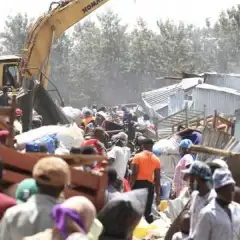
This StoryMap shows how Pamoja Trust and Cadasta rapidly mapped six Nairobi locations targeted for government demolitions, identifying more than 71,000 people at risk of eviction. Using geospatial analysis, the project highlights communities facing extreme, high, and medium risk and provides clear data to inform advocacy and humanitarian response.
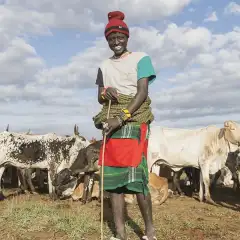
This StoryMap highlights a pastoral community in central Kenya working with Cadasta to document ancestral land rights and advocate for legal recognition. Facing intensifying droughts and climate pressures, the project uses GIS tools and dashboards to support claims for community and individual land certificates and strengthen long-term resilience and governance.
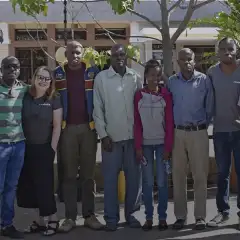
This StoryMap captures Cadasta’s four-day training in Nakuru, Kenya, bringing together six partner organizations to build skills in GIS, Survey123, data collection, land tenure analysis, and digital storytelling. Through hands-on mapping, field exercises, dashboards, and collaborative learning, participants strengthened their capacity to document land rights and support advocacy across Kenyan communities.
This StoryMap shares how Cadasta and UNIPA are supporting Awá communities in Colombia in mapping and protecting their ancestral territories, with Awá women leading the effort. Through roles in mapping, security, training, and governance, women are strengthening land rights, preserving cultural knowledge, and shaping the future of their forests and communities.
This StoryMap highlights Cadasta’s partnership with JCS, TAA, and MLA to support Maya communities in Southern Belize as they document ancestral lands, strengthen governance, and advance long-awaited land rights. Through youth-led mapping, women’s leadership, and reforestation efforts, communities are building the evidence and capacity needed to secure their territories for future generations.
Cadasta and CONFENIAE are using cutting-edge mapping tools, community-led monitoring, and legal boundary verification to resolve long-standing territorial conflicts across the Ecuadorian Amazon. The StoryMap highlights how Indigenous communities are securing over 100,000 hectares, strengthening governance, and advancing land titling through real-time data, participatory mapping, and peaceful boundary agreements. Leer en español.
UNIPA works to protect the Awá people’s territorial rights and biodiversity in Nariño, Colombia. Through its partnership with Cadasta, it advanced land demarcation, documented community members, strengthened women’s leadership, and supported claims across thousands of hectares, reinforcing governance and environmental protection across 33 resguardos. Leer en espanõl.
This StoryMap highlights Rainforest Labs, a Cadasta and Cool Earth initiative equipping Awajún and Asháninka communities in Peru with real-time data, digital tools, and mapping technology to protect their territories. By combining Indigenous knowledge with satellite monitoring and local training, communities can better track threats, strengthen governance, and safeguard the Amazon rainforest. Leer en español.
This StoryMap uses the fictional story of Mama Rose to explain fit-for-purpose land registration and Cadasta’s bottom-up approach. It shows how simple digital tools, GNSS, and Survey123-based surveys help communities document people, parcels, and rights, bridge data and capacity gaps, and secure land tenure in complex, conflict-affected settings worldwide today.
This StoryMap traces Cadasta’s evolution from a small open-source experiment to a global geospatial leader documenting more than 30 million hectares across 52 countries. Through strategic pivots, partnerships, and powerful mapping tools, it shows how Cadasta is transforming land governance and advancing secure land and resource rights worldwide.
This StoryMap highlights findings from Cadasta’s independent impact assessment with 60 Decibels, capturing how communities in Odisha and Jharkhand are using Cadasta’s tools to document land and resource rights. Through interviews with data collectors and landholders, it shares evidence of improved accuracy, confidence, and livelihood benefits driven by secure land documentation.
This StoryMap highlights Cadasta’s milestones in 2019, including the launch of Platform 2.0, expansion of regional training teams, new partnerships, and the inaugural Land Rights Challenge Fund. Featuring global project snapshots and technology innovations, it showcases Cadasta’s growing impact in advancing land and resource rights for communities in more than 25 countries.
This StoryMap introduces the essential components of a map—titles, borders, legends, orientation, scale, credits, and design principles. With clear explanations and examples, it guides readers through how maps communicate information and why layout, symbology, and purpose matter when creating effective, accurate, and visually clear cartographic products.
This StoryMap introduces real-world applications of GIS—from mapping and urban planning to disaster response, agriculture, natural resource management, transportation, surveying, and public health. It shows how geospatial tools help organizations visualize problems, analyze data, and make smarter, faster decisions across diverse sectors.
A proud member of the Corus International family.