Aligning Policy and Practice in Kenya’s Community Land Governance

Feb 25 — 2026

By Wambayi Wabwire

The Kenya Community Land Act of 2016 (CLA) charted a clear path forward for documenting and recognizing community land rights. A decade later, Kenya is entering a critical phase in implementing the CLA. Recognizing this pivotal moment, the Kenya Land Alliance and Landesa convened a Multi-stakeholder Platform – the Ardhi Caucus, which brings in state and non-state actors working on land rights in Kenya with a collective vision to improve land tenure security for all.
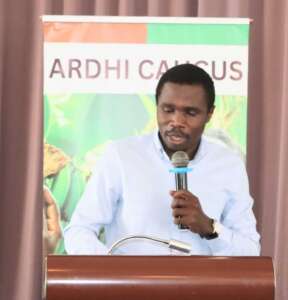
Wambayi Wabwire, Land Administration Advisor at Cadasta

As Cadasta’s Land Administration Advisor, I represented Cadasta at the Ardhi Caucus’ strategic convening, which aimed to align 2026 land justice advocacy efforts in Kenya. As part of this convening, I contributed to an ongoing dialogue about next steps for the CLA and how coordinated engagement can improve community land registration.

Convening participants pointed to several challenges to the CLA’s implementation. Using traditional methods, community land registration can be slow and expensive. Land records are often paper-based and fragmented, scattered across district land offices. It takes time and resources to document so much land, and the land registrars are already spread thin.

Throughout the convening, one theme kept resurfacing: how can we register community land at scale without significantly increasing the cost? 

Policy is not the issue. In Kenya, the legal frameworks are already in place. The real constraint is delivery capacity. The scale of land still left to document is overwhelming, and public resources are already strained to the breaking point. 


Accessible digital tools that uphold existing legal frameworks can help close this gap.

Cadasta works with governments and civil society partners to provide configurable geospatial tools that simplify documentation and reduce technical barriers. Our approach links participatory mapping with transparent digital registers. A digital-first approach lowers costs, reduces mistakes, and improves overall transparency. Cadasta’s tools, for example, can easily link social and geospatial data (within centimeters of accuracy) on a configurable platform that reduces the costs associated with traditional paper-based surveying.

Reducing the cost and complexity of community land registration means more people can document their rights under the CLA. We have a clear opportunity to advance rights under the law, aligning policy with practical digital tools.

Kenya’s policy foundation for land registration is already set. The next step is matching implementation with that policy by equipping surveyors with digital tools that make registration faster and less resource-intensive.

We look forward to continued collaboration with Ardhi Caucus members, communities, and governments to pilot practical, scalable systems for community land registration. Together we can make land registration more affordable, inclusive, and transparent, ensuring policy meets implementation at scale.If you are interested in seeing how Cadasta’s technology supports faster, more inclusive land documentation, click here to reach out to us and request a demo of the work. Connect with Cadasta to learn more about our tools, approach, and opportunities to collaborate.

SHARE POST