
Celebrating the International Year of the Woman Farmer 2026
Women farmers are at the heart of global food systems. They cultivate crops, care for livestock, steward natural resources, and feed their families and communities. Yet millions continue to face insecure rights to the land they farm.
The International Year of the Woman Farmer 2026 recognizes the essential role women play across agrifood systems while highlighting the structural barriers that continue to limit their potential, including unequal access to land, finance, technology, and decision-making.
For women farmers, secure land rights are only the beginning.
Combined with better data, stronger local systems, and the ability to make informed decisions about where they live and farm, secure tenure becomes a catalyst for more productive agriculture, stronger livelihoods, and more resilient communities.
Cadasta’s work builds on this foundation, helping communities turn secure land rights into more productive agriculture, stronger livelihoods, and more resilient futures.
Looking Beyond Land Titles
For decades, efforts to improve agricultural productivity have focused on increasing access to improved seeds, fertilizer, irrigation, markets, and finance. These investments matter. But they often overlook a more fundamental question: can women confidently invest in land they do not have secure rights to?
When a woman cannot be certain she will be able to farm the same land next year, her ability and incentive to invest in that land are fundamentally constrained. The same concerns apply to her ability to inherit it, pass it on to her children, defend it from encroachment, or decide how to use it. Research has shown that insecure inheritance rights reduce long-term agricultural investment, including fertilizer use, soil conservation, and other improvements that increase productivity over time.
Secure land rights provide the confidence to make those investments. But lasting change requires more than documentation alone. It also requires the information, tools, and local capacity to manage land, agriculture, and natural resources more effectively.
A Place-Based Approach in Uganda
Uganda demonstrates what becomes possible when secure land rights are combined with community-led data and stronger local systems.
Approximately 84 percent of Uganda’s land is held under customary tenure, much of it historically undocumented. Without formal recognition, families can face overlapping claims, boundary disputes, land grabbing, and uncertainty that discourages long-term investment. These challenges often fall disproportionately on women.
Since 2019, Cadasta has partnered with Uganda’s Ministry of Lands, Housing and Urban Development and local civil society organizations to strengthen customary land documentation through participatory mapping, legal literacy, digital data collection, and community engagement. But the work extends beyond documenting parcels.
Using geospatial technology and locally managed data systems, a country’s communities, Area Land Committees, and government officials gain a clearer understanding of where people live, farm, manage natural resources, and invest in their futures. These place-based data assets help strengthen local land governance, improve decision-making, and create more efficient pathways to legal recognition while laying the foundation for better agricultural planning, environmental stewardship, and community development.
Women are intentionally included throughout this process, not simply as household members, but as recognized landholders and decision-makers.
Today, 77 percent of documented parcels supported through Cadasta’s Uganda program are owned or co-owned by women. For many families, this represents the first time a woman’s rights to the land she farms have been formally recognized.
When Security Becomes Opportunity
The impact of secure land rights becomes visible in the decisions women make once uncertainty is removed.
In Namutumba, Naigaga Eseza inherited land from her parents but spent years defending it from competing claims by relatives. When the land documentation process reached her community, she was skeptical. The process seemed almost too simple to be legitimate.
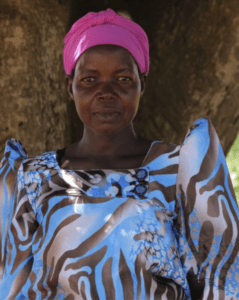
Then she received her Certificate of Customary Ownership.
“This land title has given me freedom,” she said.
Today, Eseza is planning a permanent home and expanding commercial fruit and tree production on her land.
Her story reflects a broader pattern seen throughout Uganda. With greater confidence that their rights will be protected, landholders begin investing in permanent agriculture, planting trees, raising livestock, improving soils, building homes, accessing credit, and creating new economic opportunities for their families.
These are not simply investments in land. They are investments in livelihoods, resilience, and the future of entire communities.
Better Data for Better Decisions
The experience in Uganda reflects a broader evolution in how Cadasta approaches development.
Secure land rights remain the foundation. But the same place-based data that support land documentation also help communities and governments make better decisions about agriculture, livelihoods, climate resilience, natural resources, and local development.
Through participatory mapping, GIS technology, mobile data collection, and locally managed information systems, Cadasta helps communities answer questions that extend well beyond ownership:
- Where are farms expanding?
- Which natural resources require protection?
- How is land being used?
- Where are conflicts emerging?
- What investments will strengthen livelihoods?
- How can governments and communities better plan for the future?
By strengthening local capacity to collect, manage, and use these data, communities become better equipped to respond to environmental change, improve agricultural productivity, and shape their own development.
This place-based approach reflects a simple principle:
Better data leads to stronger systems→stronger systems support better decisions, and better decisions →create more resilient communities.
Women at the Center of More Resilient Communities
Uganda is one example of a lesson Cadasta sees across its work globally.
When women are intentionally included in land documentation and governance, the benefits extend well beyond individual households.
Across Cadasta’s Strengthening Land and Forest Rights program, every grassroots partner implemented strategies to increase women’s participation in mapping, data collection, governance, and land documentation. In Ghana, the program supported more than 1,000 customary land agreements, including hundreds issued in women’s names. In India, women are securing individual and joint forest rights that strengthen livelihoods while supporting long-term stewardship of forests and natural resources.
Gender equity does not emerge automatically through technology or land administration. It must be intentionally designed into the systems that govern land and shape development.
Building the Future Women Farmers Deserve
As the world celebrates the International Year of the Woman Farmer, it is worth recognizing that women farmers need more than agricultural inputs. They need secure rights to the places where they live, cultivate, and invest. They need local institutions that recognize those rights. They need data that help communities manage land, strengthen livelihoods, protect natural resources, and plan for the future.
By combining secure land rights with community-led mapping, geospatial technology, and stronger local systems, Cadasta is helping create the conditions for women farmers to invest in their families, steward the land, and build more resilient communities.
When women can make informed decisions about where they live and farm, the benefits extend far beyond individual fields. They strengthen livelihoods, improve food security, and help entire communities thrive.


