


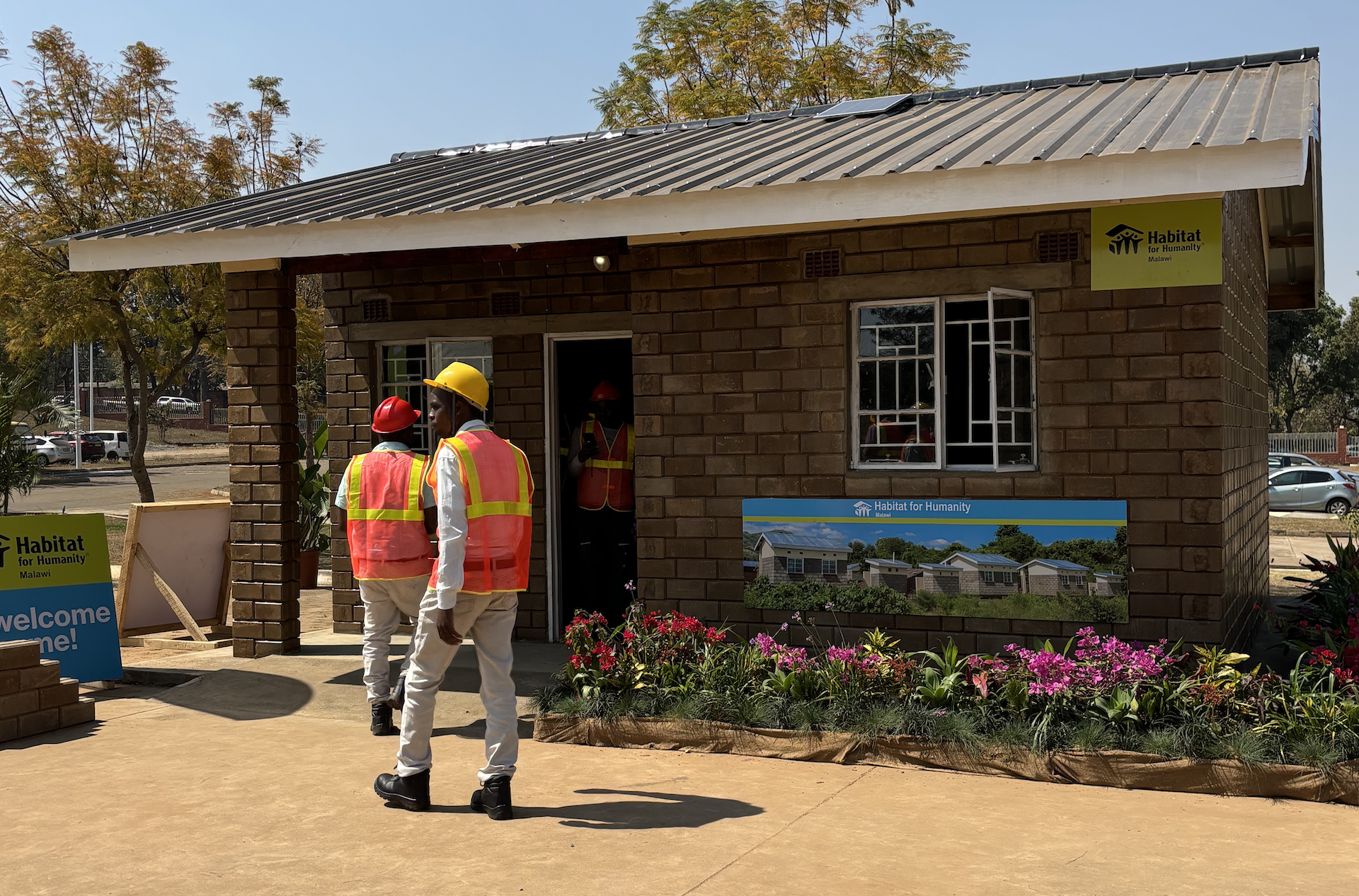
In a small community in Honduras, a young boy no longer wakes up to dirt floors that fill his home with dust and parasites. Instead, he plays on a smooth, concrete surface, which is a simple change that brings dignity, health, and stability to his life and home. In neighboring countries, families affected by hurricanes are now assessed within hours, ensuring they receive help faster than ever before.
These everyday transformations are part of a regional effort by Habitat for Humanity International (HFHI) and Cadasta to strengthen housing security and disaster resilience across Latin America and the Caribbean (LAC). Together, HFHI and Cadasta are shifting from short-term crisis response to long-term resilience, powered by reliable data and digital tools.
Replacing Dirt Floors with Safer Spaces
Through the ambitious “100 Mil Pisos para Jugar” (100,000 Floors to Play On) initiative, HFHI aims to replace dirt floors in vulnerable households with safe concrete surfaces by 2028. This effort spans ten countries—Colombia, the Dominican Republic, Honduras, Peru, Guatemala, Mexico, Nicaragua, Ecuador, Bolivia, and El Salvador—bringing healthier living conditions to families most in need.
Cadasta’s role has been to give structure and clarity to the data behind the mission. By migrating and standardizing household data, improving the accuracy of GIS mapping, and building a unified Monitoring, Evaluation, and Learning (MEL) system, HFHI teams now have the tools to scale their work equitably and transparently.
“In the 100K Households Project, Cadasta helped us to improve the reliability and quality of our data, and the efficiency with which it was collected and analysed. The support, training, flexibility, and security that they provided were instrumental in enabling HPH LAC to increase the number of assessments it can implement by 3.5 times.” – Katrina Lisnichuk, MEAL Manager, HPH LAC
This data-driven foundation also strengthens families’ sense of tenure security, helping to document the improvements made to their homes and providing evidence that supports safer, more stable living condition. Secure tenure is not only about ownership; it’s about the right to stay, to invest, and to recover.
Responding Faster After Disasters
The LAC region is also one of the most disaster-prone in the world, with hurricanes, earthquakes, and floods displacing thousands of families each year. Under the Disaster Response, Recovery, and Resilience (DR3 LAC) project, Cadasta and HFHI developed a scalable digital system that enhances disaster response by making it faster, more coordinated, and more effective.
From rapid mobile surveys used in the first hours after a storm to monitoring dashboards that track contractor performance during rebuilding, the systems support the entire cycle and guide decisions that support the first emergency response all the way through to long-term reconstruction.
With these tools and procedures, HFHI teams can prioritize repairs, coordinate seamlessly with governments, and track recovery progress in real time across ten countries, helping families return to safe homes more quickly and with greater transparency.
By reinforcing data systems that connect physical safety to the security of tenure, Cadasta helps HFHI strengthen one of the organization’s four strategic pillars: ensuring that families have not only a roof over their heads but also the rights, recognition, and records that allow them to remain in place and rebuild after disaster strikes.
A Partnership Built on Trust and Expertise
For HFHI leaders, the partnership is more than tools; it’s about confidence, capacity, and trust.
“The collaboration with CADASTA has been instrumental in enhancing our proficiency in utilizing ESRI tools, optimizing the production of tools for our work, and benefiting from the expertise of professionals in developing essential forms, dashboards, maps, and processes. The expertise and knowledge of the parties instilled a sense of confidence, enabling swift progression. Their consistent willingness to provide support and advice was also noteworthy.” – Enrique Montero – Manager, Housing Finance, Habitat for Humanity International
Why It Matters
Behind every data dashboard is a family rebuilding after a disaster or a child playing on a safe floor for the first time. By integrating digital tools and data-driven decision-making into housing programs, Cadasta and Habitat for Humanity are enabling communities across Latin America and the Caribbean to transition from crisis to resilience, constructing safer homes and fostering stronger futures.
Together, these efforts enable communities across Latin America and the Caribbean to transition from crises to resilience, constructing safer homes and fostering stronger, more secure futures.