


By Cadasta Staff
The Democratic Republic of the Congo (DRC) is entering a pivotal moment for community land rights.
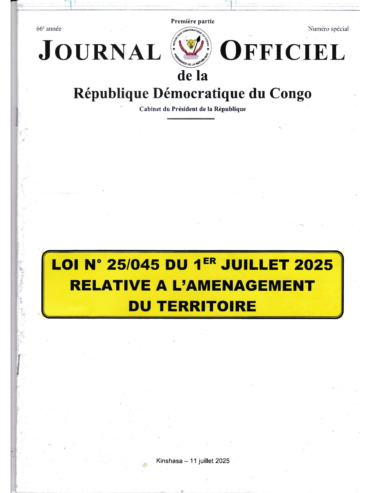
In July 2025, the President of the Democratic Republic of the Congo signed into law new land use planning legislation,Law No. 25/045. This new law formally recognizes customary land rights within the country’s land use planning framework. This creates new opportunities for communities, many of whom have lived on and stewarded their land without formal recognition, to secure their legal land rights.
As the legal framework and its implementation begin, evidence from mapped lands and lived community experiences can directly inform how these new policies and regulations take shape. At the same time, Cadasta is launching a new partnership with the Jacobs Futura Foundation to help turn this policy shift into action on the ground.
Cadasta’s long-time partner Solidarité pour la Promotion des Femmes Autochtones (SPFA), a Congolese grassroots organization led by and for Indigenous women, recognizes this opportunity. The organization is working to ensure that community knowledge and locally generated data inform the country’s next steps as these new laws move from policy to practice.
With support from Jacobs Futura Foundation, Cadasta and SPFA are undertaking a project to help translate national policy reform into concrete recognition of community land rights in the DRC.
In the first phase, SPFA and the Commission Nationale de la Réforme Foncière (CONAREF)– a government body under the Ministry of Land Affairs responsible for implementing national land reform– are working to finalize the validation of 27,063 hectares of community-mapped land data. Once validated, this data will support the next steps toward formalization while the government finalizes and issues the regulations that will govern the final steps needed to formalize rights. Until then, Cadasta will document the project processes and lessons learned to share and discuss with other civil society organizations and stakeholders.
The ultimate goal is to close the gap between customary and formal land systems by advancing communities’ land rights in the wake of this historic legislation. It is also to help ensure that communities living under customary tenure in the DRC have a voice in how land reform moves forward.
SPFA brings deep community trust, decades of engagement with customary chiefs, and a strong track record of mobilizing local participation in land governance processes that often exclude Indigenous voices. By ensuring Indigenous and local women are active participants in mapping and validation, SPFA is transforming the role of communities into co-authors of DRC’s land reform.
Across the DRC, there is growing momentum to translate policy commitments into practical solutions on the ground.
Together, Cadasta, SPFA, and Jacobs Futura Foundation are working to turn an ambitious land policy into tangible systems change, helping shape a more inclusive and resilient land governance system in the DRC.